Ancient Traditions: The Spiritual Story Behind Dasara Navaratri 2025
Dasara Navaratri 2025 is one of the most sacred and celebrated Hindu festivals, observed with devotion, grandeur, and deep spiritual significance. The term Navaratri literally means “nine nights,” and these nights are dedicated to the worship of Maa Durga and her nine forms, the Navadurga. Across India and the world, devotees fast, perform rituals, organize cultural programs, and celebrate the divine feminine energy (Shakti).
In 2025, Shardiya Navaratri will begin on September 22, 2025 (Monday) and conclude on October 2, 2025 (Thursday) with Vijayadashami or Dussehra. Beyond rituals and celebrations, Navaratri carries deep spiritual stories and ancient traditions that reveal the eternal truth of good triumphing over evil.
This blog explores the mythological stories, spiritual symbolism, and ancient customs that make Dasara Navaratri 2025 a profound journey of devotion.
The Ancient Spiritual Story Behind Navaratri
Navaratri is rooted in mythology and scriptures like the Devi Mahatmya (Durga Saptashati), Markandeya Purana, and Skanda Purana. The festival symbolizes the eternal battle between righteousness (dharma) and unrighteousness (adharma).
1. The Story of Mahishasura Mardini
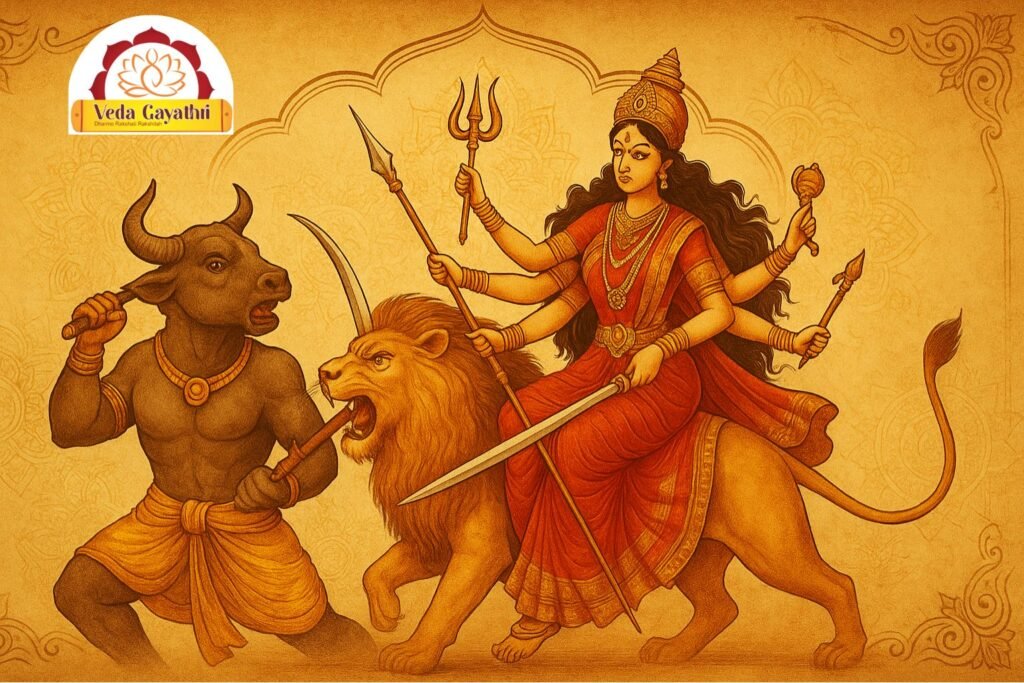
According to legend, the demon king Mahishasura performed severe penance and obtained a boon from Lord Brahma that no man or god could kill him. With this power, he attacked heaven and defeated the gods. Unable to withstand his terror, the gods invoked the supreme feminine energy, and thus Goddess Durga was born.
Armed with divine weapons from all gods and riding a lion, Durga fought Mahishasura for nine long nights and finally slew him on the tenth day. This victory of Mahishasura Mardini (Durga) is celebrated as Vijayadashami, symbolizing the triumph of good over evil.
2. The Story of Lord Rama and Ravana
Another significant legend associated with Navaratri is from the Ramayana. Before fighting Ravana, Lord Rama worshipped Goddess Durga during these nine days to gain her blessings for victory. On the tenth day, Rama defeated Ravana, marking the celebration of Dussehra.
This story reflects the tradition of Ramlila and Ravana Dahan (burning effigies of Ravana), celebrated widely in North India.
3. The Story of Goddess Saraswati and Knowledge
In South India, Navaratri also emphasizes Saraswati Puja and Ayudha Puja. It is believed that worshipping Goddess Saraswati on the last three days brings knowledge, wisdom, and learning. Weapons, books, musical instruments, and tools are placed before the goddess and worshipped for blessings.
Ancient Traditions of Navaratri
Over centuries, Navaratri has evolved with regional flavors, but its essence remains deeply spiritual. Let’s look at some ancient traditions followed during Navaratri 2025:
1. Ghatasthapana (Kalash Sthapana)
The festival begins with Ghatasthapana, where a sacred Kalash is placed and barley seeds are sown. This symbolizes the invocation of Goddess Durga into the home and the start of divine energy for nine days.
2. Akhand Jyoti (Eternal Lamp)
A lamp is lit on the first day and kept burning continuously throughout the nine days. The Akhand Jyoti represents the eternal presence of divine light and removes negativity.
3. Navadurga Worship
Each day is dedicated to one of the nine forms of Goddess Durga:
Day 1 – Shailaputri (Strength & Stability)
Day 2 – Brahmacharini (Discipline & Devotion)
Day 3 – Chandraghanta (Peace & Courage)
Day 4 – Kushmanda (Energy & Creation)
Day 5 – Skandamata (Motherhood & Compassion)
Day 6 – Katyayani (Courage & Righteousness)
Day 7 – Kalaratri (Destruction of Negativity)
Day 8 – Mahagauri (Purity & Serenity)
Day 9 – Siddhidatri (Fulfillment & Divine Powers)
Worshipping all nine forms during Navaratri is believed to bless devotees with strength, wisdom, and spiritual growth.
4. Fasting and Self-Purification
Navaratri fasting (vrat) is one of the most ancient traditions. Devotees consume only sattvic food like fruits, milk, and grains, while avoiding onion, garlic, alcohol, and non-vegetarian food. Fasting purifies the body and mind and strengthens devotion.
5. Kanya Puja (Kanjak Puja)
On Ashtami and Navami, devotees worship young girls as embodiments of the divine feminine energy. Their feet are washed, they are offered food like puri, chana, halwa, and given gifts. This practice symbolizes respect for the feminine force.
6. Vijayadashami (Dussehra)
On the tenth day, Vijayadashami marks the victory of Goddess Durga over Mahishasura and Lord Rama over Ravana. It is an auspicious day to begin new ventures, education, or journeys. In South India, Ayudha Puja (worship of tools and weapons) is performed, while in Bengal, Durga Visarjan concludes the festival with grand processions.
Spiritual Symbolism of Navaratri
Navaratri is not only about external celebrations but also represents an inner spiritual journey:
First three days – Destroying negative qualities like anger, greed, and ego (Durga as the destroyer of evil).
Next three days – Nurturing positive qualities like love, compassion, and knowledge (Lakshmi as the giver of wealth and values).
Final three days – Attaining wisdom and enlightenment (Saraswati as the goddess of wisdom).
The tenth day, Vijayadashami, represents victory — not just in battles, but also the conquest of self over ignorance and darkness.
Regional Celebrations of Navaratri
West Bengal & East India – Grand Durga Puja with pandals, idols, dhunuchi dance, and cultural programs.
Gujarat & Maharashtra – Colorful Garba and Dandiya Raas dances every night.
South India – Golu doll displays, Ayudha Puja, and Saraswati Puja.
North India – Ramlila performances and burning of Ravana effigies.
Despite regional differences, the underlying message remains the same — the victory of good over evil and the worship of Shakti.
Why Dasara Navaratri 2025 is Spiritually Significant
It falls in the Sharad Ritu (autumn season), a time of natural balance, making spiritual practices more powerful.
Chanting Durga Saptashati during Navaratri is said to remove obstacles and grant divine blessings.
The festival unites families and communities through collective worship, music, dance, and cultural programs.
Starting new ventures on Vijayadashami 2025 is considered highly auspicious.